
How Much Sugar Is Actually Bad for Your Teeth? An Indian Diet Guide
2 November 2026
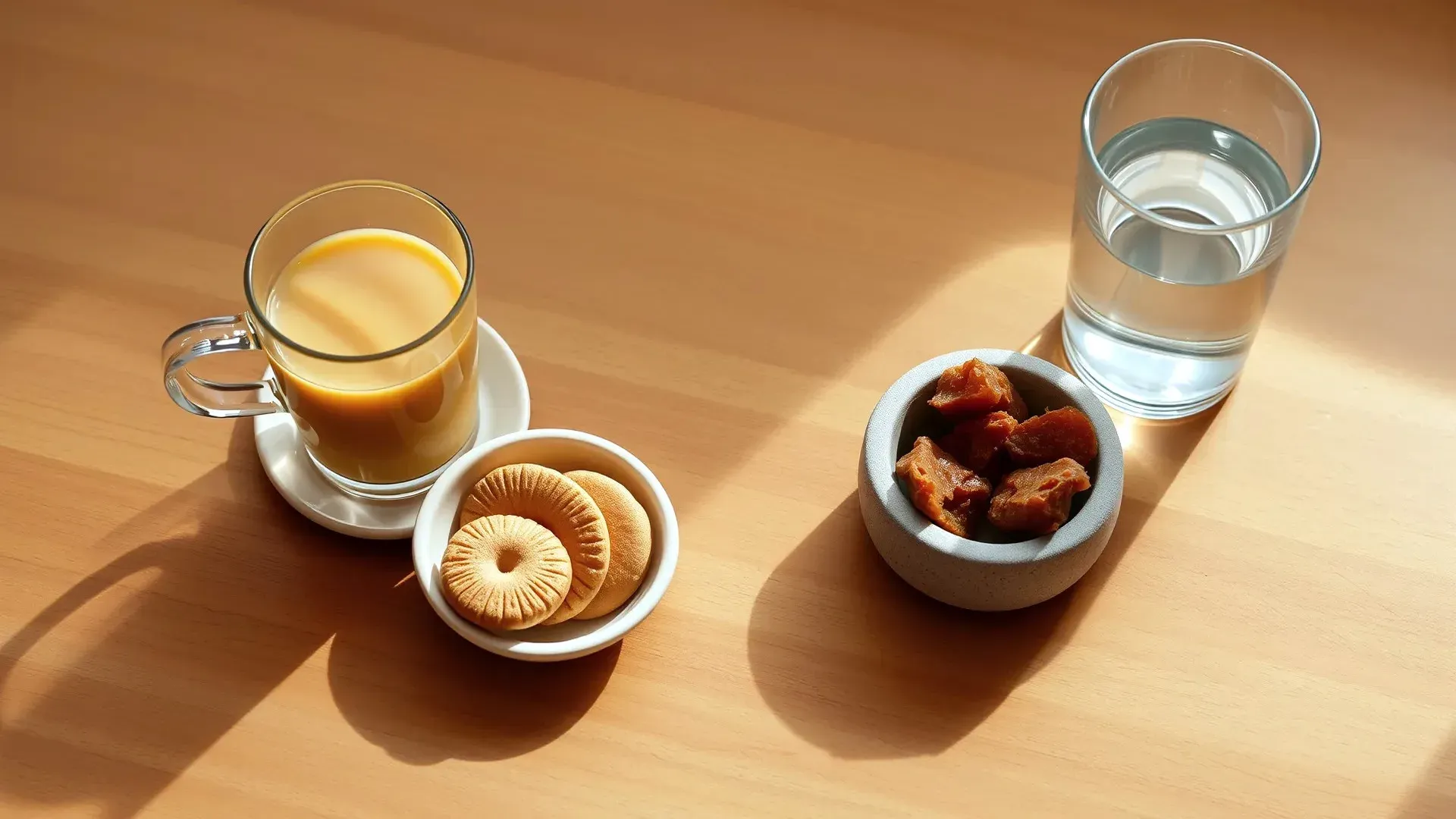
Short answer: WHO wants free sugars below 10% of daily energy, and below 5% would be better. On a 2,000 kcal diet that second number works out at about 25 g a day — six teaspoons. Most people don't break it at dessert. They break it at 4 pm, with the second chai.
You don't have to give up mithai. You have to stop eating it eight times a day.
How Much Sugar Is Actually Bad for Your Teeth?
WHO gives two numbers. Free sugars should stay below 10% of total energy intake, and cutting to below 5% would reduce caries risk further, across a lifetime. That's WHO's own wording.
On a 2,000 kcal diet, 10% is about 50 g (12 teaspoons) and 5% is roughly 25 g (6 teaspoons). That 25 g is a worked example for an average adult, not a universal cap: a six-year-old needs less, someone doing heavy physical work more.
WHO grades them differently: under 10% is strong, under 5% is conditional, because very few populations eat that little and the extra benefit comes from population studies, not trials.
It's a ceiling, not a target.
What counts as free sugar: anything added by a manufacturer, a cook or you, plus the sugars in honey, syrups, fruit juice and concentrate. Whole fruit, vegetables and plain milk don't count. That's the difference between a banana and a glass of banana juice.
| What was eaten | Free sugar | Share of the 25 g reference |
|---|---|---|
| 3 cups chai, 2 tsp sugar each | ~24 g | ~96% |
| 4 glucose biscuits | ~6 g | ~24% |
| 200 ml packaged mango drink | ~27 g added (~32 g total) | ~108% |
| 2 pieces of mithai | Varies by shop and recipe | Often most of a day's reference |
The biscuit number is off the pack: about 25 g of sugar per 100 g, a little over 1 g a biscuit. Chai and four biscuits put you at six teaspoons before lunch, and it doesn't feel like a sugar habit. It feels like breakfast.
What Sugar Actually Does Inside Your Mouth
Sugar doesn't drill a hole. Plaque bacteria ferment it into acid, and below a plaque pH of about 5.5 that acid pulls mineral out of enamel. Saliva and fluoride push it back. A cavity is where loss outruns repair.
Early damage is a chalky white spot and can still reverse. Once the surface breaks it's a hole, and holes don't fill themselves. That's where a filling, or eventually a root canal, comes in. Stickiness matters too: biscuits, rusk, dried fruit and mithai cling to molar grooves.
Is Frequency Really More Important Than Amount?
Both matter. Frequency is the one you can change without giving anything up.
Plaque pH drops within a minute of a sugar hit and takes 20 to 40 minutes to recover, buffered by saliva. Eat again inside that window and it never returns to a safe level. UK prevention guidance describes the result: repeated intakes keep plaque below the demineralisation threshold for hours.
Three meals is three acid attacks. A grazing day, with a biscuit at 11, sweet chai at 4, something after dinner and a toffee at 9, is seven or eight, with no gap long enough to repair. Same grams. More damage. The evidence is also steadier for frequency than for total grams, especially in adults.
Practical shape: two or three sugar contacts a day, at meals, a few hours apart. One gulab jamun after lunch beats half a gulab jamun four times.
Is One Sugary Drink a Day Bad for Your Teeth?
Yes, and worse than the same sugar on a plate.
A 200 ml packaged mango drink lists about 13 g of added sugar per 100 ml: roughly 27 g a carton, closer to 32 g with the mango's own sugar. More than the entire 25 g reference, in ninety seconds.
Daily sugar-sweetened drinks are linked to higher caries risk in adults too. Sipping is the real problem: five minutes is one acid attack, two hours is a bath.
If you have one, have it with a meal, finish it, use a straw, rinse. "Zero sugar" versions drop the sugar, not the acid: most colas and fruit flavours still contain citric or phosphoric acid. WHO is blunter about young children: under 2, none at all.
Are Fruits Bad for Your Teeth?
No. Whole fruit isn't free sugar, and chewing it stimulates the saliva that protects enamel. Two a day is not a dental problem.
Juice is the exception. Juicing releases the sugars and removes the fibre that slowed them, which is why WHO counts fruit juice as free sugar. Fresh orange juice is still a sweet drink to your teeth.
Dried fruit is sticky and easy to overeat, so keep it to meals. Citrus is acidic, so rinse before brushing.
Is Jaggery, Honey or Brown Sugar Better for Teeth?
No. All three are free sugar. Honey is named in the WHO definition. Jaggery and brown sugar are cane sugar with more molasses left in: different colour, different price, same sugar.
The research is better than the marketing. A 2023 study exposed 60 extracted human premolars to refined sugar, jaggery, brown and palm sugar one, three and five times a day. Demineralisation rose with frequency in every group. Jaggery and brown sugar did slightly less damage than refined, and palm sugar did least.
Then the detail that matters: three exposures of jaggery caused roughly the same surface-hardness loss as one of refined sugar.
Gur isn't harmless. It's slightly less efficient at doing harm, and three helpings land you where one helping of white sugar would. It's a lab model on extracted teeth, not a human trial, and even palm sugar lost 25% of surface hardness at five exposures a day.
Honey has antibacterial activity in a dish, not on a tooth. In your mouth it's sticky, acidic once diluted, and eaten three times a day.
Verdict: pick the one you like, use less, and stop treating gur or honey as a safe harbour. The swap that works is less sweetener, not a different sweetener.
How Do You Read an Indian Food Label Without Being Fooled?
The front of the pack is marketing. The back table carries legal weight, and FSSAI requires total and added sugars to be declared separately.
- Read per 100 g, not per serve. Serving size is the brand's call.
- India has no mandatory front-of-pack warning. So use these cut-offs: 5 g or less per 100 g is low, above 22.5 g is high; for drinks, 2.5 g and 11.25 g per 100 ml.
- "No added sugar" isn't low sugar. FSSAI allows it only if nothing sugary was added, and the pack must then say "contains naturally occurring sugars". Date paste or juice concentrate used for sweetness counts as sugar.
- "Sugar-free" means 0.5 g or less per 100 g. It says nothing about acid.
- Ingredients are listed by weight. Sugar, jaggery, glucose, invert syrup or malt extract in the first three means it's a sugar product with a healthy-looking front.
- Aliases: sucrose, dextrose, maltose, maltodextrin, corn syrup, invert syrup, juice concentrate, honey, jaggery.
"Made with real fruit" and "baked not fried" tell you nothing about teeth.
What Actually Works in an Indian Kitchen
1. Cut chai sugar by half a teaspoon a week. Two spoons, then 1.5, then 1, then half. Most people stop noticing by week three, and this removes more sugar than every dessert decision combined.
2. Stop dunking biscuits. Refined starch plus sugar, sticky, eaten slowly. Keep roasted chana, peanuts or plain dahi by the cup instead.
3. Move mithai to the meal. One sitting, after lunch, then rinse. Don't leave the box open for four days.
4. No juice in a bottle or sippy cup. It bathes the teeth for as long as a child holds it.
5. Take sugar out of bedtime milk. Anything sweet after the last brush sits there all night, when saliva flow is lowest. Rinse with water instead.
6. Keep sugar-free gum handy. Chewing lifts saliva flow, and xylitol isn't fermented to acid the way sucrose is.
Children need the same rules with less slack. Our children's dentistry service handles first visits and habit coaching.
How Long After Eating Sugar Should You Brush?
Rinse straight away. Then wait about 30 minutes, and a full hour if what you had was acidic: juice, citrus, soft drink, imli or tamarind chutney.
Acid softens the outer enamel, so brushing straight away can take mineral with it. The American Dental Association advises waiting an hour after acidic food or drink, and rinsing with water in the meantime.
The evidence is cautious rather than airtight: most of it comes from lab work on enamel, not long human trials. Rinsing costs nothing either way.
Two rules matter more than the exact count: don't brush straight after vomiting or reflux, and do brush last thing at night with fluoride toothpaste.
When Diet Advice Isn't the Answer
Early decay is cheap to fix. Deep decay isn't. Our cost guide sets out the stages, and a professional cleaning twice a year removes the plaque that makes all of this worse.
Gutkha, paan masala and tobacco sit outside this conversation. They aren't a sugar problem, and they matter more here than anything above.
We're at 222 Model Town, Sonipat, with a periodontist and an endodontist in one building. Call +91 72067 22618 or use the contact page.
Book Your Visit
Fill out the form below and we will contact you immediately.
FAQ
Frequently Asked Questions
01How much sugar is safe for teeth per day?
WHO recommends keeping free sugars below 10% of daily energy and says below 5% is better. On a 2,000 kcal diet, 5% is about 25 g, or six teaspoons. That is a ceiling, not a target. Three cups of chai with two teaspoons of sugar each already uses almost all of it.
02Does sugar cause cavities directly?
Not directly. Plaque bacteria ferment the sugar into acid, and the acid dissolves enamel mineral. That is why frequency and stickiness matter so much. Sugar eaten quickly and rinsed away does far less harm than sugar that sits on a tooth for an hour.
03Is one sugary drink a day bad for teeth?
Yes. A 200 ml packaged juice or mango drink usually carries 25 to 32 g of sugar, roughly the whole 25 g daily reference in one carton. Daily sugar-sweetened drinks are linked to higher decay risk in adults too. Have it with a meal, finish it in one go, use a straw, rinse.
04Are fruits bad for teeth?
Whole fruit is not counted as free sugar and is fine for teeth, because chewing stimulates protective saliva and fibre slows the sugar release. Fruit juice is different. Juicing releases the sugars and removes the fibre, which is why WHO counts juice as free sugar.
05Is jaggery or brown sugar better for teeth?
Not meaningfully. Both are cane sugar and both count as free sugar. Laboratory studies on extracted teeth show slightly less enamel damage than refined sugar at the same exposure, but damage rises with every extra exposure. Three hits of jaggery roughly equal one hit of refined.
06How long after eating sugar should I brush?
Rinse with water immediately, then wait about 30 minutes. If you had something acidic, such as juice, citrus or a soft drink, wait closer to an hour. Brushing straight away can scrub enamel that acid has temporarily softened.