
Braces, Invisalign, and Smile Makeovers in Sonipat: Picking What Actually Fits Your Life
14 August 2026
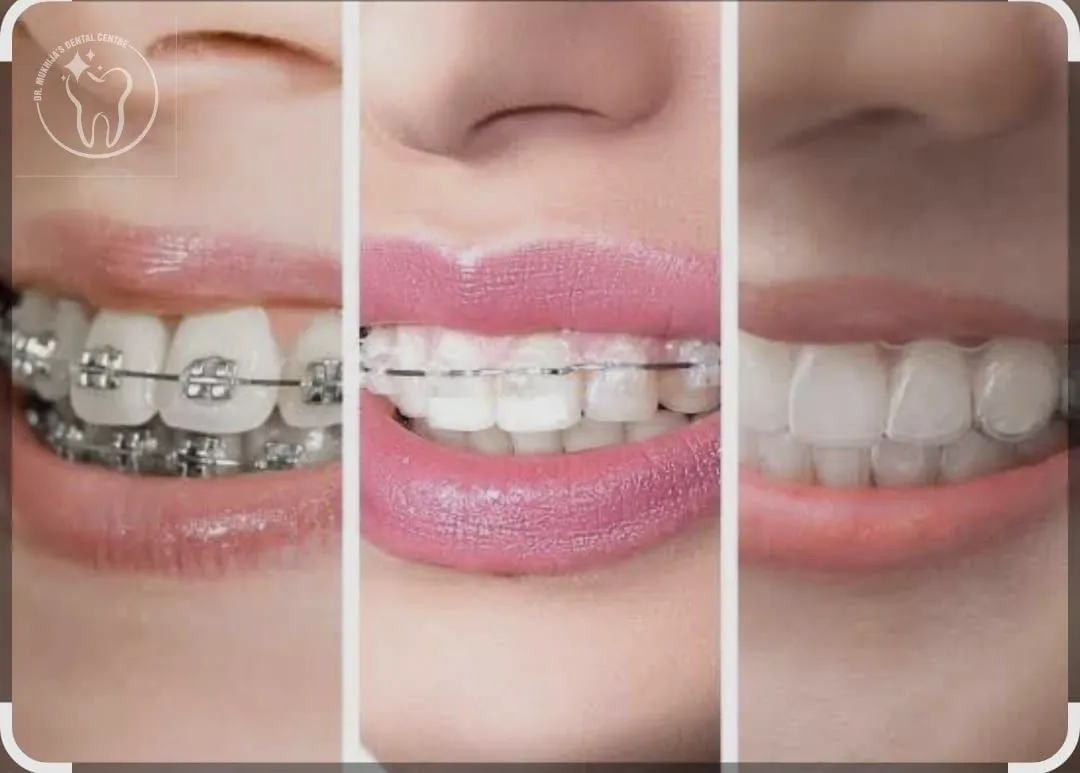
Somewhere between "I've always wanted straighter teeth" and actually booking a consultation, most people get stuck comparing options — metal braces versus Invisalign, crowns versus veneers, and a dozen price points that don't seem to make sense next to each other. So let's actually sort through it, the way we'd explain it to a patient sitting in our chair in Model Town.
Braces vs. Invisalign: The Real Differences, Not Just the Marketing
Traditional braces — metal brackets and wires — remain one of the most effective, predictable ways to correct misalignment, crowding, and bite issues, especially in more complex cases. They work continuously, don't require the discipline of taking anything in or out, and are usually the more affordable route.
Invisalign and clear aligners are removable, nearly invisible trays that shift teeth gradually. The appeal is obvious — nobody notices you're wearing them, you can take them out to eat, and they're far more comfortable day-to-day than metal and wire. The trade-off is that they require discipline (they only work if worn 20-22 hours a day) and tend to cost more.
Here's what we tell patients honestly: Invisalign isn't automatically "better" — it's better suited to certain cases and certain lifestyles. Someone with mild to moderate crowding who's disciplined about wearing trays and doesn't want visible metal is a great Invisalign candidate. Someone with a more complex bite issue, or a teenager who might not reliably wear removable trays, often does better and faster with traditional braces.
What Actually Affects Braces Cost in Sonipat
If you've been comparing braces cost in Sonipat between clinics and getting wildly different numbers, here's what's usually driving that:
- Complexity of your case. Minor crowding costs less to correct than a significant bite misalignment requiring longer treatment or additional appliances.
- Type of bracket. Standard metal brackets are the most economical. Ceramic (tooth-colored) brackets cost more but blend in better.
- Treatment duration. Longer treatment plans naturally involve more adjustment visits, which factors into overall cost.
- Whether extractions or other prep work is needed before braces go on.
Similarly, Invisalign cost in Sonipat depends heavily on how many aligner trays your treatment plan requires — mild cases might need a handful, more complex ones can require 20-30+ trays over the course of treatment.
A Quick Story About Managing Expectations
A college student from Sector 12 came in wanting Invisalign purely because she didn't want visible braces before her final year photos and job interviews. Fair concern. But her case involved a moderate bite misalignment that Invisalign alone wasn't going to fully correct within her timeline. We were upfront about it — Invisalign could work, but it would take longer and might not fully resolve the bite issue the way traditional braces would in a shorter span.
She went with a modified plan: shorter-duration ceramic braces instead, which gave her the discretion she wanted without the extended timeline. The point of that story isn't "we talked her out of Invisalign" — it's that a good orthodontist in Sonipat should tell you what actually fits your case and goals, not just sell whatever's trendiest.
Beyond Straightening: Crowns, Veneers, and Whitening
Once teeth are aligned — or even independent of alignment — a lot of patients ask about smile makeovers more broadly. A few common questions:
Tooth Cap (Crowns) — What's the Zirconia Difference?
A dental crown, or "tooth cap," covers a damaged or weakened tooth entirely. Zirconia crowns have become the preferred option for a lot of patients because they combine strength (they hold up well under chewing force, especially for molars) with a more natural, tooth-like appearance compared to older metal-fused options. They're a solid long-term investment, particularly on teeth that have had root canal treatment and need extra protection.
Veneers: Cost and What They're Actually For
Veneers are thin shells bonded to the front of teeth, mainly used for cosmetic correction — chips, gaps, discoloration that whitening can't fix, or minor shape irregularities. Composite veneers are the more budget-friendly option and can often be done in a single visit, though they don't last as long as porcelain veneers and can stain over time. Porcelain veneers cost more but resist staining better and typically last longer. Veneer cost in India varies based on material and how many teeth are involved — a single veneer for a chipped front tooth is a very different quote than a full smile makeover across eight teeth.
Teeth Whitening: Professional vs. Over-the-Counter
In-clinic teeth whitening uses higher-concentration whitening agents applied under controlled conditions, giving faster, more even results than store-bought strips or kits — and it's done safely without damaging enamel or irritating gums, which is a real risk with unsupervised at-home treatments.
Don't Skip Teeth Cleaning Before Cosmetic Work
Something that gets overlooked: professional teeth cleaning (scaling and polishing) should generally happen before whitening, veneers, or even starting braces. Plaque and tartar buildup can throw off both the accuracy of shade-matching for veneers and the fit of orthodontic brackets. Teeth cleaning cost in Sonipat is relatively minor compared to cosmetic procedures, but it's a step worth not skipping — both for hygiene and for making sure your cosmetic results actually look right.
Choosing the Right Orthodontist in Sonipat
A few things worth checking before committing to braces or Invisalign anywhere:
- Do they show you a digital or physical treatment plan before starting, or just start adjusting?
- Do they explain realistic timelines, not just best-case scenarios?
- Are they upfront when a cheaper or trendier option isn't actually the right fit for your case?
- Do they handle related issues — like needing a crown or extraction as part of the plan — in-house, or will you be sent elsewhere mid-treatment?
At Mukhija Dental Clinic, orthodontic treatment is planned alongside our other services — so if your case needs an extraction, a crown afterward, or gum treatment first, it's coordinated under one roof instead of you juggling multiple clinics.
The Bottom Line
Whether you're weighing braces cost in Sonipat against Invisalign, or wondering if a zirconia crown or a veneer is the right cosmetic fix, the honest answer is: it depends on your specific teeth, your bite, and your lifestyle — not on whichever option is being upsold hardest.
If you're in Sonepat, Kundli, Murthal, or nearby and thinking about straightening your smile or fixing something cosmetic, come in for an honest consultation at Mukhija Dental Clinic, Model Town. We'll walk you through what actually fits, not just what's trending.
Book Your Visit
Fill out the form below and we will contact you immediately.
FAQ
Frequently Asked Questions
01How long does Invisalign treatment usually take?
It varies by case, but mild to moderate corrections often take anywhere from six months to a year and a half, compared to traditional braces which can range similarly depending on complexity.
02Are ceramic braces as effective as metal braces?
Yes — they work the same mechanically, the main difference is aesthetics (tooth-colored versus metal) and typically a slightly higher cost.
03Can adults get braces, or is it only for teenagers?
Adults get braces and Invisalign regularly. Tooth movement works the same way at any age, though healing and treatment time can vary slightly.
04Do veneers damage your natural teeth?
Porcelain veneers require a small amount of enamel removal for proper fit, which is why they're considered a semi-permanent commitment. Composite veneers are generally less invasive. A dentist should explain this trade-off clearly before you proceed.
05How often should I get professional teeth cleaning?
Every six months is the standard recommendation for most people, though those with gum sensitivity or heavier plaque buildup may benefit from more frequent visits.